Aaron Beck
Explore the cognitive foundations of Cognitive Behavioral Therapy and transformative mental health interventions.

D
Determinism
F
Free Will
I
Intuitive
S
Scientific
-1.0
-0.8
-0.6
-0.4
-0.2
0.2
0.4
0.6
0.8
1.0
-1.0
-0.8
-0.6
-0.4
-0.2
0.2
0.4
0.6
0.8
1.0
Aaron Beck
Abraham Maslow
Afro-Caribbean Syncretic
Alfred Adler
Albert Bandura
Albert Ellis
Alexander Lowen
Anna Freud
Bert Hellinger
Bowlby and Ainsworth
C.R. Snyder
Carl Jung
Carl Rogers
Duckworth and Seligman
Edward Thorndike
Erich Fromm
Eysenck and Kahneman
Gabrielle Roth
George Kelly
Gordon Allport
Harry Stack Sullivan
Jacques Lacan
Janina Fisher
Jean Piaget
Jordan Peterson
Karen Horney
Kurt Lewin
Leopold Szondi
Lev Vygotsky
Melanie Klein
Murray Bowen
Neuroscience
Noam Chomsky
Otto Rank
Peter Levine
Roberto Assagioli
Salvador Minuchin
Sigmund Freud
B.F. Skinner
Stanislav Grof
Stephen Porges
Thomas Hanna
Viktor Frankl
Wilhelm Reich
Wilhelm Wundt
William Glasser
William James
William Miller
Womanist Psychology
Introduction
Aaron Temkin Beck (1921-2021) was an American psychiatrist and father of Cognitive Behavioral Therapy (CBT). His revolutionary approach transformed mental health treatment by emphasizing the role of distorted thinking patterns in emotional and behavioral problems. Beck's work has become one of the most researched and validated forms of psychotherapy.
Originally trained as a psychoanalyst, Beck developed his cognitive model while treating depression in the 1960s. He observed that depressed patients experienced automatic negative thoughts and developed the cognitive triad concept: negative views of oneself, the world, and the future. His structured, time-limited approach made therapy more accessible and effective.
Beck's contributions include developing assessment tools like the Beck Depression Inventory (BDI) and Beck Anxiety Inventory (BAI), which remain gold standards in clinical practice. His cognitive model emphasizes that by identifying and challenging distorted thinking patterns, individuals can experience lasting improvements in mood and behavior.
MindMatch Analysis
"Structure meets science in evidence-based transformation"
Aaron Beck's CBT is particularly well-suited for individuals who prefer structured, evidence-based approaches to mental health. His techniques heavily emphasize science-based interventions, measurable progress, and practical tools that can be applied immediately.
CBT also preserves personal agency (free will) within its theoretical framework, by arguing that you have the conscious capacity to change your actions, influence your emotions, and eradicate your symptoms. If you value scientific validation and personal agency, Beck's cognitive interventions may align perfectly with your worldview.
The Cognitive Triangle
At the heart of Beck's cognitive model is the Cognitive Triangle, illustrating how thoughts, feelings, and behaviors are interconnected. Understanding these connections is essential for changing negative patterns and improving mental health.
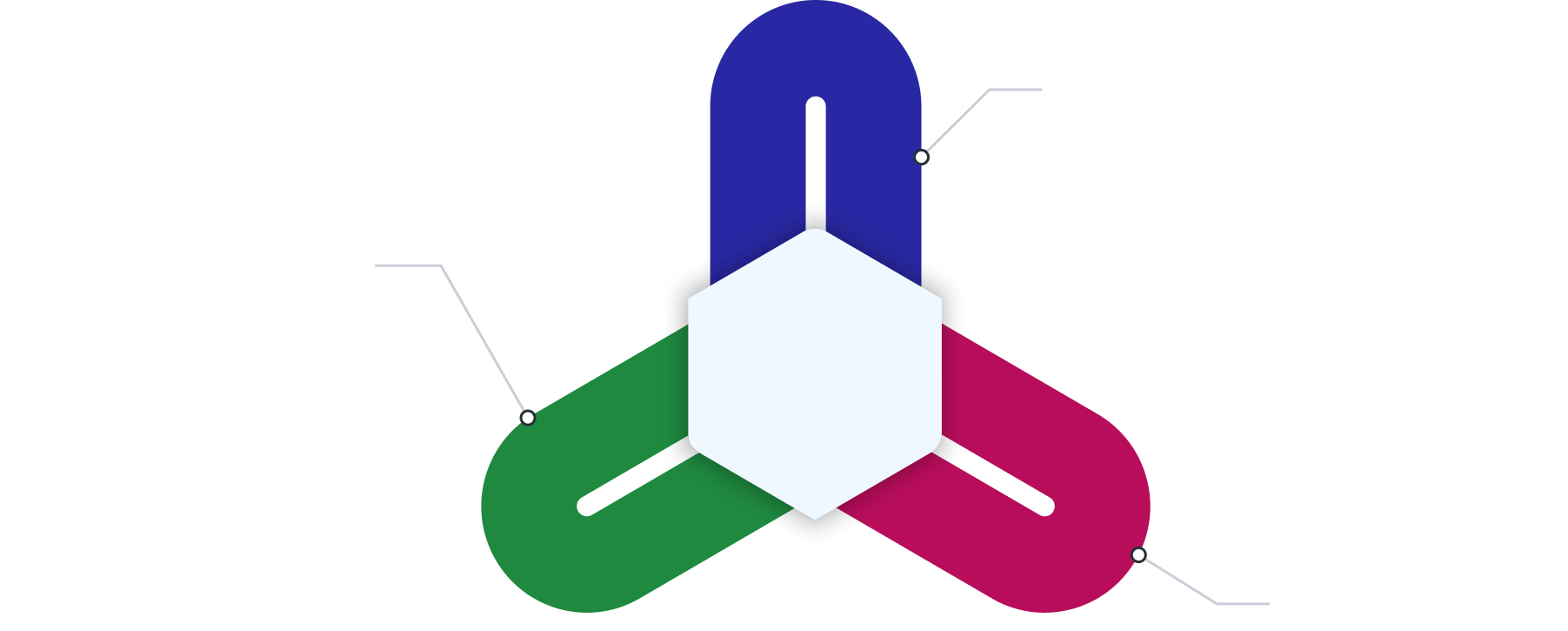
Thoughts (Cognitions)
Your interpretations, beliefs, and internal dialogue about situations. These automatic thoughts often occur rapidly and unconsciously, shaping your emotional responses and behavioral choices.
Feelings (Emotions)
The emotional responses generated by your thoughts. Emotions like anxiety, sadness, or anger arise from how you interpret events, not from the events themselves.
Behaviors (Actions)
The actions you take in response to your thoughts and feelings. Behaviors can reinforce negative thought patterns or, when changed intentionally, can break negative cycles.
How The Triangle Works
The three components influence each other in a continuous cycle. A negative thought ("I'm going to fail") triggers an emotion (anxiety), which leads to a behavior (avoiding the task). This avoidance then reinforces the original negative thought, creating a self-perpetuating cycle.
The power of CBT lies in recognizing that you can interrupt this cycle at any point. By challenging distorted thoughts, you can change your emotional responses and behaviors. Similarly, by changing behaviors, you can influence your thoughts and feelings. This flexibility makes CBT a highly practical and effective approach.
CBT Interventions
Click To Learn More!
Thought Record
Track automatic thoughts, identify cognitive distortions, and develop balanced alternative perspectives. Document situations, emotions, automatic thoughts, evidence for and against, and balanced responses.
Cognitive Restructuring
Challenge and reframe negative thought patterns using Socratic questioning. Examine evidence, consider alternative explanations, and develop more balanced, realistic ways of thinking.
Behavioral Activation
Schedule meaningful and pleasurable activities to combat depression and avoidance. Break the cycle of inactivity by gradually increasing engagement with valued life activities.
Exposure Therapy
Gradually confront feared situations in a controlled way to reduce anxiety and break avoidance patterns. Build confidence through systematic desensitization.
Core Belief Identification
Explore and identify deep-seated beliefs that shape your thoughts and behaviors. Understand how core beliefs influence automatic thoughts and emotional responses.
Resources
The MindMatch Aaron Beck In-Depth Module
Coming SoonA comprehensive in-depth module designed to guide you through all eight of Beck's CBT interventions, equipped with scheduling, advanced analytics, and tailored recommendations - all accessible on your dashboard upon purchase.
Cognitive Therapy and the Emotional Disorders
Beck's foundational text introducing the cognitive model and its applications to various psychological disorders.
Cognitive Behavior Therapy: Basics and Beyond
A comprehensive guide to CBT principles and techniques, written by Judith Beck, continuing her father's legacy.
Feeling Good: The New Mood Therapy
David Burns' bestselling self-help book based on Beck's CBT principles, offering practical techniques for overcoming depression.
Beck Institute for Cognitive Behavior Therapy
The premier center for CBT training and research, founded by Aaron Beck, offering resources, training, and certification programs.
Smiling Minds
A free Mindfulness-Based Cognitive Therapy (MBCT) meditation app designed to help bring balance to people's lives, developed by psychologists and educators.
CBT-i (US Department of Veteran Affairs)
A mobile app based on Cognitive Behavioral Therapy for Insomnia, designed to help improve sleep habits and address insomnia symptoms.