Exposure Therapy
Gradually confront feared situations in a safe, controlled manner to reduce anxiety and build confidence through experience.
Why This Exercise Matters
Avoidance maintains anxiety. When you avoid feared situations, you never learn that the feared outcome rarely occurs or that you can handle it if it does. Beck recognized that cognitive work alone isn't always enough—behavioral experiments through exposure provide the most powerful evidence against anxiety-driven beliefs.
Exposure therapy works through a process called habituation. By staying in anxiety-provoking situations long enough, your nervous system learns the situation is safe. Your anxiety naturally decreases, and you develop new, adaptive beliefs: "I can handle this," "The catastrophe I feared didn't happen," "My anxiety is uncomfortable but not dangerous."
Research shows exposure therapy is highly effective for specific phobias, social anxiety, panic disorder, and PTSD. It's challenging but transforms lives by expanding your world from the confines of fear.
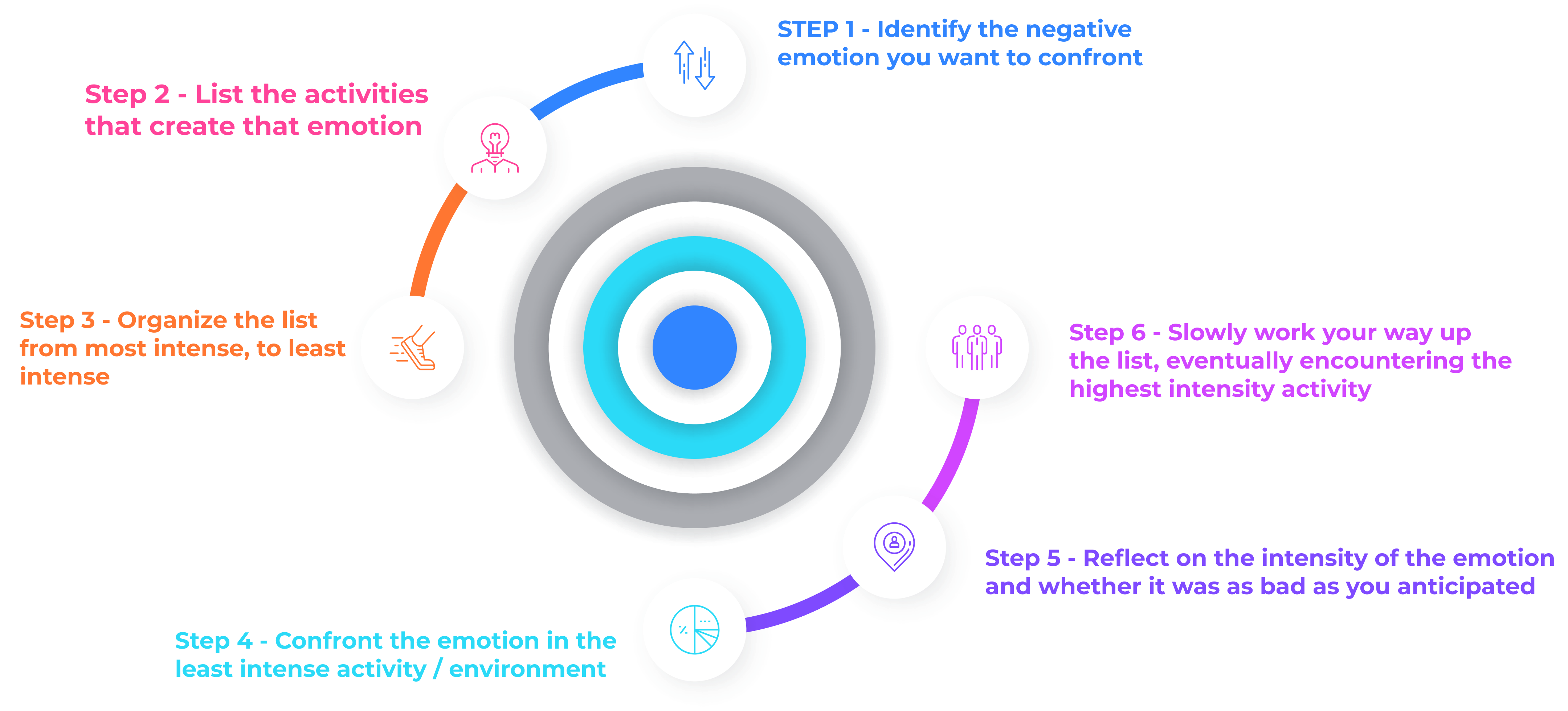
Step-by-Step Guide
Identify Your Fear
Clearly define what you're avoiding and why. Example: 'I avoid public speaking because I fear people will judge me and I'll humiliate myself.' Be specific about the feared outcome.
Create a Fear Hierarchy
List 10-15 situations related to your fear, ranging from least anxiety-provoking (10-20% anxiety) to most (90-100%). Example for public speaking: 10%: speak in front of mirror, 30%: present to one friend, 50%: speak in small group meeting, 90%: give formal presentation to large audience.
Learn Anxiety Management Skills First
Before starting exposure, master breathing techniques, progressive muscle relaxation, or grounding exercises. These are your tools during exposure, though you'll rely on them less over time.
Start with the Lowest Item
Begin with the situation that causes the least anxiety. Don't jump ahead. Mastering easier exposures builds confidence and skills for harder ones.
Stay in the Situation
The key to exposure is staying until your anxiety decreases by at least 50%. If you leave at peak anxiety, you reinforce the fear. Expect anxiety to spike then gradually decline—this is habituation working.
Repeat Each Exposure
Repeat the same exposure multiple times until it causes minimal anxiety (below 20%). This consolidates learning. Most people need 3-7 repetitions per hierarchy item.
Progress Up the Hierarchy
Once you've mastered a level, move to the next. Don't skip levels. Systematic progression builds lasting confidence and prevents overwhelm.
Challenge Safety Behaviors
Safety behaviors (like only speaking when you've memorized every word, or avoiding eye contact) maintain fear. Gradually drop these crutches to fully learn that you're safe without them.
Record Your Experiences
After each exposure, document: predicted anxiety level, actual peak anxiety, how long until it decreased, what you learned. This data proves your predictions are often wrong and helps track progress.
Practice in Real-World Situations
Once you've practiced controlled exposures, seek out natural opportunities to face your fear. Real-world practice consolidates gains and prevents relapse.
Example
Lisa Overcomes Social Anxiety
Lisa's Fear: Intense anxiety in social situations, particularly meeting new people or being in groups. She avoided parties, networking events, and even casual social gatherings. Her core belief: "People will think I'm boring and awkward."
Lisa's Exposure Hierarchy Progress
- •Level 1 (20% anxiety): Made small talk with cashiers at stores - Predicted anxiety: 40%, Actual peak: 35%, After 5 repetitions: 15%
- •Level 3 (40% anxiety): Attended a coworker's small dinner party for 1 hour - Predicted anxiety: 70%, Actual peak: 55%, Stayed the full hour, anxiety decreased to 25%
- •Level 6 (70% anxiety): Joined a book club and attended three meetings - By third meeting, anxiety was 30%. She even enjoyed it.
- •Level 9 (90% anxiety): Attended a professional networking event, stayed 90 minutes, initiated conversations with 5 people - Predicted anxiety: 95%, Actual peak: 75%, Final: 40%
Key Discovery: Lisa's feared outcomes never materialized. People didn't judge her as harshly as she predicted. In fact, she made several meaningful connections. More importantly, she learned that even when conversations were awkward, she could handle it—awkwardness wasn't catastrophic.
Six Months Later: Lisa regularly attends social events without crippling anxiety. Her social anxiety hasn't disappeared completely, but it's manageable (20-30% instead of 80-90%). She's no longer controlled by fear and has rebuilt her social life.
Tips for Success
Don't Escape at Peak Anxiety
Leaving when anxiety peaks reinforces the fear. Stay until anxiety decreases by at least half. This is crucial.
Expect Discomfort
Exposure is supposed to be anxiety-provoking. Discomfort means you're in the right zone for learning. Embrace it.
Go at Your Own Pace
Hierarchies are flexible. If a step feels too big, break it into smaller substeps. Progress matters more than speed.
Celebrate Courage
Every exposure you complete is an act of courage. Acknowledge your bravery, even when exposures feel small.
Consider Professional Support
For severe phobias or trauma, work with a therapist trained in exposure therapy for safety and guidance.
Be Patient with Setbacks
Sometimes anxiety spikes again after previous success. This is normal. Return to that level and repeat the exposure.
Try It Yourself
Step 1 of 5
Identify Emotions
Which emotion do you want to reduce?
Select one emotion you'd like to work on lowering the intensity of.
Explore More Interventions
Discover additional CBT techniques from Aaron Beck's therapeutic approach.
Back to All Interventions